A practical bedding guide
How to Choose BOVI Sheets and Pillowcases for Your Sleep Style
A bed is a small landscape of touch and temperature. The weave beneath your hand, the way a sheet settles across the mattress, and the texture at your cheek all influence how the room feels at night. BOVI bedding offers two familiar routes into that landscape: cotton percale, with a crisp, matte character, and cotton sateen, with a smoother surface and gentle sheen. Learning how those weaves differ can help you choose sheets and pillowcases that suit your comfort preferences, decorating plans, and approach to laundry.
There is no universally superior weave. The right choice depends on what you notice most when you climb into bed: a cool, fresh hand, a soft drape, a tailored finish, or a fabric that fits readily into your care routine. This guide looks at those details, using BOVI collections as examples rather than treating thread count or a polished product description as a substitute for personal preference.
Begin with the weave, not the label
Fabric names can sound technical, but a weave is simply the way yarns cross to form cloth. In percale, the threads pass over and under one another in a balanced pattern. That structure produces a smooth, matte surface and the familiar impression of crispness. Sateen uses a different arrangement, bringing more yarn to the surface. The result is a softer-feeling face with a subtle luster and a fluid drape.
Those impressions are useful starting points, not guarantees of how every sheet will feel. Fiber quality, finishing, fabric weight, laundering, and individual sensitivity all shape the experience. Even two cotton percale sets can feel distinct. The weave helps explain the character; it does not tell the whole story.
If you like a bed that feels freshly made and lightly structured, percale may be the more natural place to start. If you prefer a smoother surface that rests softly against the skin, sateen may be more appealing. When possible, assess the fabric by touch. If that is not practical, look beyond a collection name and compare the stated fiber, weave, thread count, trim, and care instructions.
Percale: crisp, matte, and breathable in character
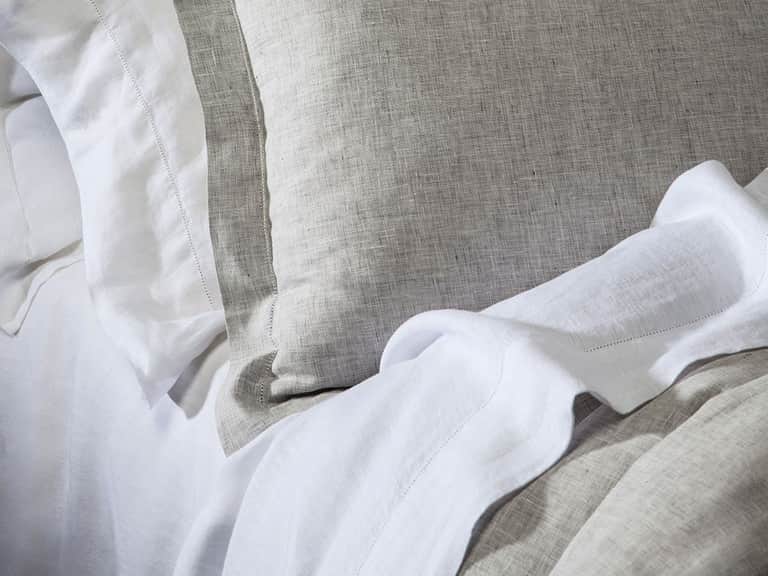
Percale often appeals to sleepers who enjoy a cool-to-the-touch first impression and a clean, orderly finish. Its matte surface catches less light than sateen, so it tends to look understated and crisp. The fabric’s structured feel can make the bed appear neatly composed, whether the rest of the room is spare and modern or layered with patterned quilts and textured throws.
Several BOVI collections illustrate different versions of cotton percale. The BOVI Simply Percale Sheet Set is made from 100% long-staple cotton in a 400-thread-count percale weave and is woven and finished in Portugal. A single-line piping detail gives the set a tailored edge without overwhelming its simple look. For someone drawn to a crisp, smooth foundation with a restrained decorative touch, those details may be especially relevant.
At a lighter stated thread count, the BOVI Magnolia Sheet Set is made from 100% cotton percale with a 200-thread-count construction. Its distinctive border pattern offers a little visual definition while keeping the overall effect clean. The coordinating BOVI Magnolia Pillowcases and Shams use the same percale character and provide several sham sizes for building a layered arrangement.
The BOVI Escada Pillowcases and Shams offer another percale option, with 100% cotton and a 200-thread-count weave in colors including blue, white, silver, and latte. This makes the collection useful to consider when the feel of percale is appealing but color is also part of the decision. A cool, matte fabric can support both a quiet neutral scheme and a more defined palette.
“Crisp” does not mean uncomfortable or permanently stiff. Cotton percale can soften with use and laundering, while retaining a more structured character than sateen. The exact change depends on the fabric and how it is cared for. If you are accustomed to very smooth sheets, a new percale set may feel noticeably different at first. Give the fabric a fair trial across several nights rather than judging solely by its first touch.
Sateen: smooth, softly lustrous, and fluid
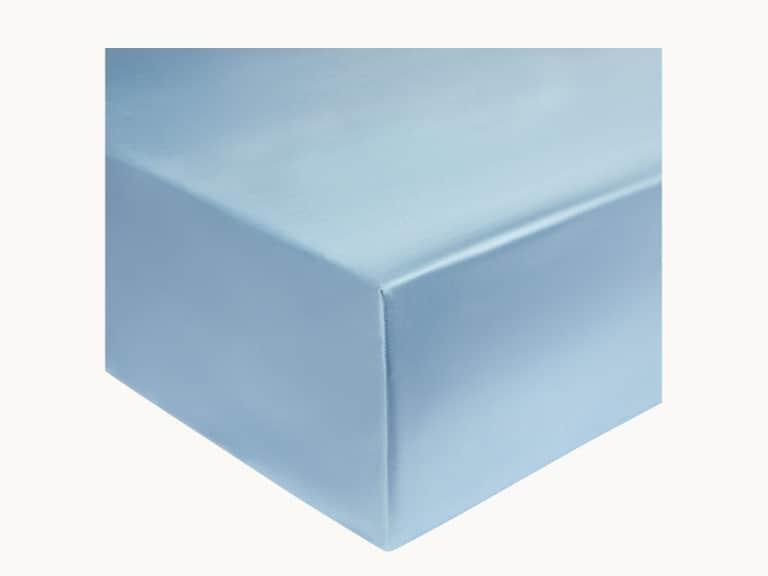
Cotton sateen turns the visual and tactile dial in another direction. The yarn arrangement creates a smoother face with a quiet sheen, making the surface feel sleek and the fabric appear more softly reflective. On a made bed, that subtle luster can bring a sense of polish without the dramatic shine of a highly reflective textile.
The BOVI Herron Sheet Set is made from 100% cotton sateen with a 300-thread-count construction. Its herringbone embroidery introduces texture along the otherwise smooth fabric, balancing a gentle sheen with a visible, tailored detail. The set is offered in white or silver and includes a flat sheet, a fitted sheet, and matching pillowcases; pillowcase quantities vary by size.
For a romantic finishing detail, the BOVI Sylvia Cotton Sateen Sheet Set pairs 300-thread-count cotton sateen with a delicate cotton voile flange. The detail gives the bed a soft outline and a more decorative character. Coordinating BOVI Sylvia Pillowcases and Shams let you carry that frame across the top of the bed, whether you prefer a restrained arrangement or several layers.
Another way to use sateen is through a smaller accent rather than changing the whole sleep surface. The BOVI Windsor Cotton Sateen Pillowcases and Shams are made from 100% cotton sateen with a 300-thread-count construction. A contrasting border in latte or silver outlines the white fabric. They can introduce a smooth, softly luminous note alongside plainer bedding, provided the colors and proportions feel balanced in the room.
Sateen is not automatically warmer, cooler, softer, or more durable in every circumstance. Its surface and drape differ from percale, but comfort is personal and depends on several factors, including room conditions, bedding layers, and how the fabric feels to you. Think of the weave as a guide to texture and appearance, then use your own sleep habits to make the final call.
What thread count can—and cannot—tell you
Thread count describes the number of threads counted in a square inch of fabric under a particular method. It can be one helpful point of comparison within a similar fiber and weave, but it is not a reliable shortcut to overall quality or comfort. A higher number does not automatically mean a better night’s sleep. The yarn, construction, finishing, and the person using the sheets matter too.
Compare like with like where possible. BOVI Simply Percale, at 400 thread count, and BOVI Magnolia Percale, at 200, share a percale identity but are distinct offerings. BOVI Herron and Sylvia are 300-thread-count sateen collections. Those figures provide context, yet they do not predict exactly how the cloth will feel after washing or against your skin.
A useful decision process is to begin with the tactile experience you want, then consider thread count alongside fiber content, design details, and care. If you are choosing between two sets with different weaves, the distinction between percale and sateen may tell you more about the surface than the thread-count number alone.
Match the fabric to the way you sleep
Think about the small routines that repeat each night. Do you turn the pillow to find the cool side? Do you prefer a tucked, smooth bed or a relaxed one that falls into soft folds? Are you sensitive to surface texture? The answers can narrow the field more effectively than a trend or a thread-count target.
- If you like a fresh, structured feel: begin by comparing percale collections such as Simply Percale, Magnolia, or Escada. Their matte character and crisp hand are central parts of the appeal.
- If you favor a smoother surface: explore cotton sateen, including Herron or Sylvia. Their softer-looking drape and subtle sheen may suit a more polished or gently romantic bed.
- If you want visual detail without a busy pattern: consider how piping, embroidery, a voile flange, or a contrasting border changes the bed’s overall impression.
- If you share a bed with someone who has different preferences: discuss the feel you each prefer and, if possible, try a fabric sample or a single pillowcase before selecting a full set.
- If you have a demanding laundry routine: prioritize clear care instructions and choose a fabric you can maintain consistently, rather than a finish that requires more attention than you can comfortably give.
For people who sleep warm, a breathable-feeling fabric and a manageable number of bedding layers can be useful considerations. Percale is often chosen for its airy, crisp character, but no weave can control every aspect of sleep temperature. Mattress materials, room temperature, humidity, sleepwear, and personal physiology all contribute. Treat textile choice as one part of a comfortable sleep environment, not a stand-alone solution.
Choose pillowcases with the same care as sheets
Pillowcases meet the face and hair for hours at a time, while also occupying one of the most visible places on the bed. Their weave can make a noticeable difference to the surface you experience most directly. A percale pillowcase provides the familiar matte, crisp touch near the cheek; sateen offers a smoother hand and a little more light across the pillow.
Begin with fit. Check whether the pillowcase or sham suits your pillow dimensions and whether its closure and construction make sense for the way you use it. A pillowcase is generally part of the sleep setup, while a sham is often selected for its decorative finish or for layering. Collection details matter: for example, BOVI Herron pillowcases and shams bring sateen and herringbone embroidery together, while BOVI Magnolia pieces pair percale with a patterned border.
Next, decide how much decoration the bed needs. A clean percale pillowcase can quiet a patterned duvet. A border, flange, or embroidered detail can draw attention to the pillows and echo trim elsewhere in the room. For a vintage-influenced accent in a different fiber, BOVI Vintage Linen Pillow Shams are made from European stonewashed linen and finished with lace trim. They are not cotton percale or sateen, but their natural texture can provide contrast in a thoughtfully mixed bed.
Finally, consider how many decorative layers you will actually use. A stack of pillows can give a bed depth, but only if it is comfortable to manage at bedtime and easy to return to its place in the morning. A few carefully chosen pieces often create a clearer visual rhythm than adding every available size.
Build a bedroom palette around the fabric
Color changes with light. White can look cool in a north-facing room and warmer in afternoon sun; silver may read as pale gray, while latte can lend a soft neutral note. Texture affects that reading too. Percale’s matte surface tends to present color quietly, while sateen’s subtle luster may shift as light crosses the bed.
Start with the largest surfaces already in the room: wall color, flooring, curtains, and a duvet or coverlet. Then decide whether sheets should blend into that palette or offer a gentle contrast. White percale is a versatile foundation for patterned layers. Silver or latte accents can establish a softer tonal relationship. A bordered or embroidered pillowcase can add definition without requiring a bold color block.
For a blackberry-inspired palette, think in layers rather than matching everything to one dark hue: muted plum or berry accents, natural flax tones, warm cream, and restrained green. The sheets can serve as the quiet ground beneath those deeper notes. If the bedding already includes an expressive print, a simple percale base may help the pattern breathe. If the room is mostly neutral, sateen’s surface sheen or a fine embroidered edge can add dimension without introducing another strong color.
Use a small sample or pillowcase in the room if possible. Observe it in morning, midday, and lamplight. Color that seems neutral under a showroom or screen light can look quite different beside your own walls and furniture.
Let the care label shape the decision
Good care begins before the first wash. Read the instructions supplied with the exact sheet or pillowcase; recommendations can differ by construction, color, trim, and finish. BOVI care directions in the available product information vary across collections, so one blanket routine should not replace the guidance for the item you own.
For instance, the Simply Percale sheet set should be approached according to its product-specific instructions, while several detailed BOVI percale items specify machine washing and low-temperature tumble drying. Some BOVI cotton sateen pieces have their own stated washing directions as well. Always check the current label and collection guidance instead of assuming that all cotton bedding is maintained in precisely the same way.
As a general habit, sort bedding by color and fabric weight, avoid overcrowding the washer, and use an appropriate detergent amount. Excess detergent can leave residue, while an overloaded drum can prevent items from moving freely. Follow the care label on water temperature, cycle, drying, and ironing. If embroidery or decorative trim is present, pay particular attention to any instructions about heat and handling.
Overdrying can leave cotton feeling harsher and may increase creasing. Removing bedding promptly when the cycle ends and smoothing it before folding or making the bed can help keep the routine simple. Ironing is a matter of taste: a crisp, pressed finish suits some bedrooms, while a naturally relaxed surface may feel more inviting to others. The goal is not to erase the fabric’s character, but to keep it clean and comfortable without unnecessary wear.
A useful purchase is one you can care for in the life you actually lead. If laundry day is shared with a busy household, a straightforward routine may be more valuable than a delicate finish you find difficult to maintain. Conversely, if you enjoy tending to textiles carefully, decorative details may feel worth the extra attention.
A simple checklist before you choose
- Feel: Would you rather lie on a crisp, matte surface or a smoother, softly lustrous one?
- Fiber and weave: Confirm that the item is cotton percale or cotton sateen, and note any other materials in trims or details.
- Construction: Compare thread count as one detail among several, not as a complete measure of comfort or quality.
- Size: Check mattress depth, sheet dimensions, and pillow size before ordering a set or individual pieces.
- Appearance: Consider how piping, embroidery, borders, or flanges will work with your duvet and room palette.
- Care: Read the product-specific instructions and decide whether the routine suits your household.
- Use: Choose pieces that fit your real sleep habits and the number of layers you want to manage each day.
A bed shaped around your own sense of comfort
Choosing BOVI sheets and pillowcases is less about finding a single best specification than understanding what each fabric contributes. Percale offers a crisp, matte character that feels fresh and looks composed. Sateen brings a smoother surface, a more fluid drape, and a gentle glow. Within each family, details such as fiber, thread count, embroidery, piping, color, and care instructions help distinguish one collection from another.
Begin with the sensation you want at bedtime. Then check the product construction, confirm the size, and make sure the care routine fits your life. A bed can be polished without being formal, and comfortable without sacrificing a thoughtful design. When weave, detail, and daily use align, the result is not just a well-made surface but a bedroom that feels naturally your own.