Silk bedding · Fiber guide
Understanding Silk Momme: What Bedding Weight Means for Everyday Use
A silk sheet’s momme number offers a helpful clue about its weight, but it is not a simple quality score. Understanding what the measurement tells you—and what it leaves out—can make choosing and caring for silk bedding much more straightforward.
Published November 13, 2026
Silk has a way of making its presence known quietly. It catches the light, slips smoothly beneath a hand, and drapes with a fluidity quite different from the crisp structure of cotton percale or the relaxed grain of linen. Yet when people compare silk bedding, much of that first impression is reduced to a number: momme.
Often written as “mm,” momme is a traditional measure of silk fabric weight. It can help explain why one sheet feels light and delicate while another feels more substantial, but it does not tell the whole story. Fiber quality, weave, finishing, construction, and care all influence how bedding performs in daily use. A higher momme is not automatically the best choice for every sleeper—or every part of the bed.
Think of momme as a useful point of orientation, not a verdict. The most satisfying choice depends on how you like fabric to feel, how frequently you plan to use it, and whether you are prepared to follow silk’s gentler laundering requirements.
What does momme mean?
Momme describes the weight of silk fabric using a traditional unit associated with silk measurement. In broad terms, a higher momme number indicates more silk by weight in a given area of fabric. That often corresponds to a denser, more substantial cloth, while a lower number may feel lighter and more fluid.
The comparison is useful, but it should be handled carefully. Momme is not the same as thread count, and the two measurements cannot be directly compared. Thread count is generally used for woven fabrics such as cotton and refers to the number of threads in a defined area. Momme, by contrast, describes silk’s weight. The numbers answer different questions.
Nor does momme measure every quality that matters. Two silk fabrics with the same stated weight can still differ in softness, drape, surface sheen, weave tightness, and durability. The silk fiber itself, the way it is woven, and the finishing process all contribute to the final feel. A label can help narrow the field, but the fabric’s full description and care instructions matter too.
How silk weight can change the feel
Weight is easiest to understand through touch and use. A lighter silk fabric may feel airy, supple, and easy to fold. It can drape closely and create a smooth layer without much bulk. A heavier fabric may have more body and a fuller hand, with a more pronounced sense of substance across the bed.
These are tendencies rather than guarantees. The weave and finishing can make a particular fabric feel crisp, fluid, or especially smooth, regardless of its weight. The same number can also feel different when used in a flat sheet, fitted sheet, pillowcase, or duvet cover because each piece is handled and constructed differently.
For everyday decisions, consider the experience you want more than the idea of choosing the “strongest” number. Someone who enjoys a light, draping layer may prefer a different weight from someone who wants a more substantial surface. Neither preference is inherently better. The right silk bedding is the one whose feel and care demands suit the way you live.
Does a higher momme mean better quality?
Not by itself. A higher momme can indicate a greater fabric weight, but quality is not a single measurement. Fiber selection, yarn consistency, weave, finishing, stitching, and the way a product is made all have a role. A heavier sheet is not automatically softer, more comfortable, or more durable in every situation.
It is helpful to think of weight as one feature in a larger set of trade-offs. More substantial fabric may appeal to people who prefer a fuller feel, while lighter silk may suit those who prioritize a less weighty drape. The intended use matters as well. Sheets experience regular contact and laundering; a decorative layer may be used differently and may have its own construction and care requirements.
Read product details as a whole. Look for fiber content, stated momme, weave or construction information, pocket depth for fitted sheets, and specific laundering guidance. If a piece combines materials, such as a silk face with a cotton reverse and a separate filling, its overall weight cannot be understood from the silk component alone.
Momme in real bedding choices
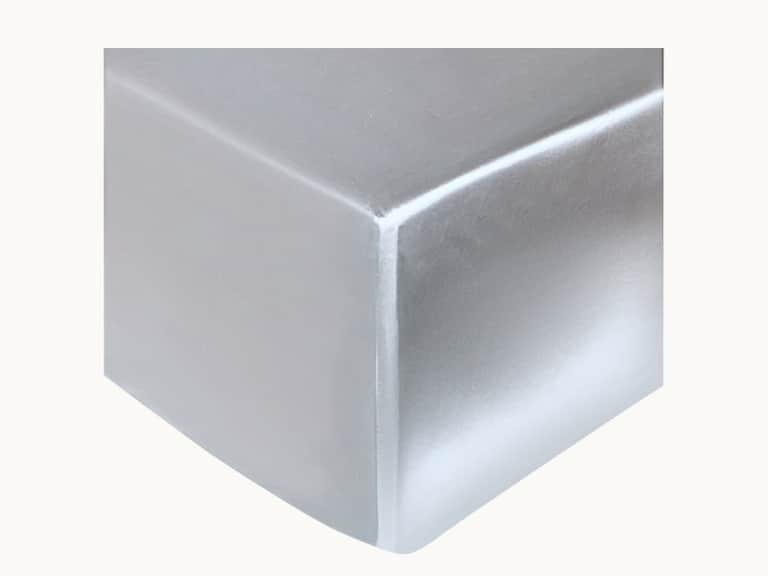
Many silk bedding pieces are described by momme, giving shoppers a way to compare the stated weight of different sheets and pillowcases. For example, the Silver Grey Silk Fitted Sheet is described as 100% mulberry silk with a 22 momme weight and a 15-inch pocket depth. Its product information also specifies a delicate wash at no more than 30°C, air drying, and cool ironing if needed.
That description offers several useful clues. The momme figure identifies the stated silk weight; the pocket depth helps assess mattress fit; and the care instructions explain how to handle the fabric. These details answer different questions, and each can matter in daily use. A sheet can have a weight that appeals to you yet still be a poor practical match if its dimensions or care routine do not work for your household.
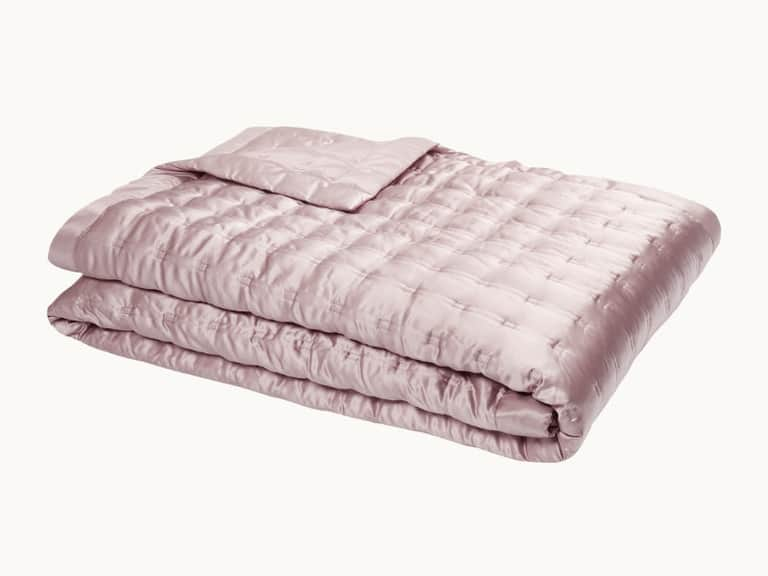
It is also worth distinguishing sheets from decorative bedding. The Windsor Silk Coverlet in Vintage Pink, for instance, has a silk upper, a cotton reverse, and polyester filling in a quilted construction. Its care guidance is dry clean only. Because it combines multiple materials and is built as a coverlet, it is not directly comparable to a silk sheet by momme alone. Construction and care are central to understanding what the item is designed to do.
Weight is only part of the comfort equation
Silk’s appeal is not simply that it is light or smooth. Its hand, drape, and relationship to warmth and moisture contribute to the way it feels against the body. But sleep comfort is personal and depends on more than a fabric specification. Room temperature, sleepwear, mattress layers, climate, and individual preferences all shape the experience.
For some people, a silk sheet’s smooth surface is the main attraction. Others notice its visual sheen or enjoy the way it layers with cotton, linen, or a coverlet. The weight may influence whether the fabric feels delicate or substantial, but it cannot predict whether every sleeper will find it comfortable.
When comparing options, ask practical questions: Do you want silk directly against the skin, or as a top layer? Do you prefer a relaxed, fluid drape or a more substantial hand? Will you wash the item at home according to its instructions, or does its care require professional attention? The answers may be more useful than seeking the largest number available.
How weave and construction shape silk bedding
A woven fabric is more than its fiber and weight. The arrangement of yarns, the density of the weave, and the finishing treatment can affect its surface, movement, and appearance. A silk fabric with a smooth finish may feel quite different from one that has a more textured or structured construction, even when both are described as silk bedding.
Construction also changes how a piece behaves on the bed. A fitted sheet must stay in place around the mattress; pocket depth and elasticized edges are relevant details. A flat sheet needs enough size and drape to tuck or layer comfortably. A duvet cover may include closures, borders, or internal ties. Pillowcases can have envelope closures, knife edges, or Oxford-style borders. These elements influence function and appearance, but none is expressed by momme.
For quilted or filled pieces, consider every layer. A coverlet may use silk on one side, cotton on the reverse, and a separate filling inside. Its feel and weight come from the complete assembly. Evaluating only the silk upper would leave out much of what defines the finished item.
Caring for silk: why gentle handling matters
Silk care begins with the individual product label. The safest approach is to follow the instructions supplied for the specific piece rather than assume that all silk bedding can be washed the same way. Some silk sheets and pillowcases are described as machine washable on a delicate cycle with mild detergent and a cool temperature limit; some items require dry cleaning. Blended or quilted constructions may have different needs from a single-layer sheet.
Where machine washing is permitted, gentle handling helps reduce unnecessary strain. Use the specified delicate cycle and temperature, choose an appropriate mild detergent, and avoid mixing silk with rough items, hooks, or hardware that could catch the fabric. Do not substitute harsh bleaching products or high heat for the care directions. If the instructions say to turn a piece inside out, air dry, or avoid tumble drying, treat those details as part of the garment’s design requirements.
Air drying is frequently recommended for silk bedding. Arrange the item carefully and keep it away from excessive heat. If ironing is allowed, use the specified cool setting and avoid applying more heat than necessary. The objective is not to make silk perfectly rigid or glossy; it is to preserve the fabric’s surface and drape while keeping the bedding clean.
Care habits can matter as much as initial fabric weight. A more substantial silk does not become care-free simply because it feels heavier. Conversely, a lighter silk does not necessarily require complicated treatment if its label permits a manageable routine. Before choosing, make sure the instructions fit your time, equipment, and willingness to handle the fabric gently.
A practical checklist for comparing silk sheets
When assessing silk bedding, use momme as one checkpoint among several. A quick, consistent comparison can prevent a single number from overshadowing the details that will matter after the bedding arrives.
- Fiber content: Check whether the item is pure silk or a blend, and identify the materials used in any lining or filling.
- Stated weight: Use momme to understand the silk fabric’s relative weight, not as a complete quality rating.
- Weave and finish: Read the description for details that may explain the surface, sheen, or drape.
- Construction: Look at closures, borders, stitching, fitted-sheet pocket depth, and any layered components.
- Care requirements: Confirm whether the item is washable, requires a delicate cycle, must air dry, or is dry clean only.
- How you will use it: Consider whether the item is for nightly contact, occasional layering, or primarily decorative use.
- Your preferred feel: Decide whether you want a lighter, fluid fabric or a more substantial hand; there is no universal winner.
Common misconceptions about silk momme
“The highest number is always best.” A higher figure indicates greater weight, not automatic superiority. Comfort and usefulness depend on personal preference, construction, and care as well as weight.
“Momme is the same as thread count.” These measurements describe different things. Momme is used for silk weight; thread count is a separate measure commonly associated with woven cotton fabrics. A number from one system cannot be translated directly into the other.
“The momme number predicts the whole bedding item’s weight.” It describes the silk fabric, not necessarily every layer of a finished product. Quilting, lining, filling, borders, and other materials contribute to the complete piece.
“All silk can be washed the same way.” Care instructions vary by product and construction. Always check the label or product guidance. A silk sheet approved for delicate machine washing and a quilted coverlet marked dry clean only do not share the same routine.
Choosing for everyday use
The best way to choose silk bedding is to connect the specification to a real habit. If a sheet will be used nightly, its feel, fit, and laundering routine deserve equal attention. If a coverlet is intended as an occasional top layer, its construction and cleaning instructions may be more decisive than the silk weight alone. For pillowcases, the closure and fit can affect how neatly the fabric sits around the pillow.
There is no need to turn momme into a contest. A lower number is not automatically flimsy, and a higher one is not automatically more comfortable. The measurement is valuable because it adds context: it helps explain differences in fabric weight and gives shoppers a shared point of comparison. It becomes most useful when paired with the rest of the product information.
Silk rewards attention. Handle it gently, follow its care directions, and consider how each layer will be used. The number on a label may begin the comparison, but the decision comes down to a wider picture: fabric, weave, construction, fit, maintenance, and the feel you want at the end of the day.
The takeaway
Momme is a practical guide to silk fabric weight, not a stand-alone measure of comfort or quality. It can help explain why some silk bedding feels lighter and more fluid while other pieces have greater substance, but weave, fiber, finishing, and construction remain part of the story. Care instructions matter just as much: a sheet, pillowcase, and quilted coverlet may all require different handling.
Compare the full specification, think about how you will use the bedding, and choose the feel that suits you. With those details in view, silk momme becomes what it should be: a useful tool for making a considered, everyday choice.